
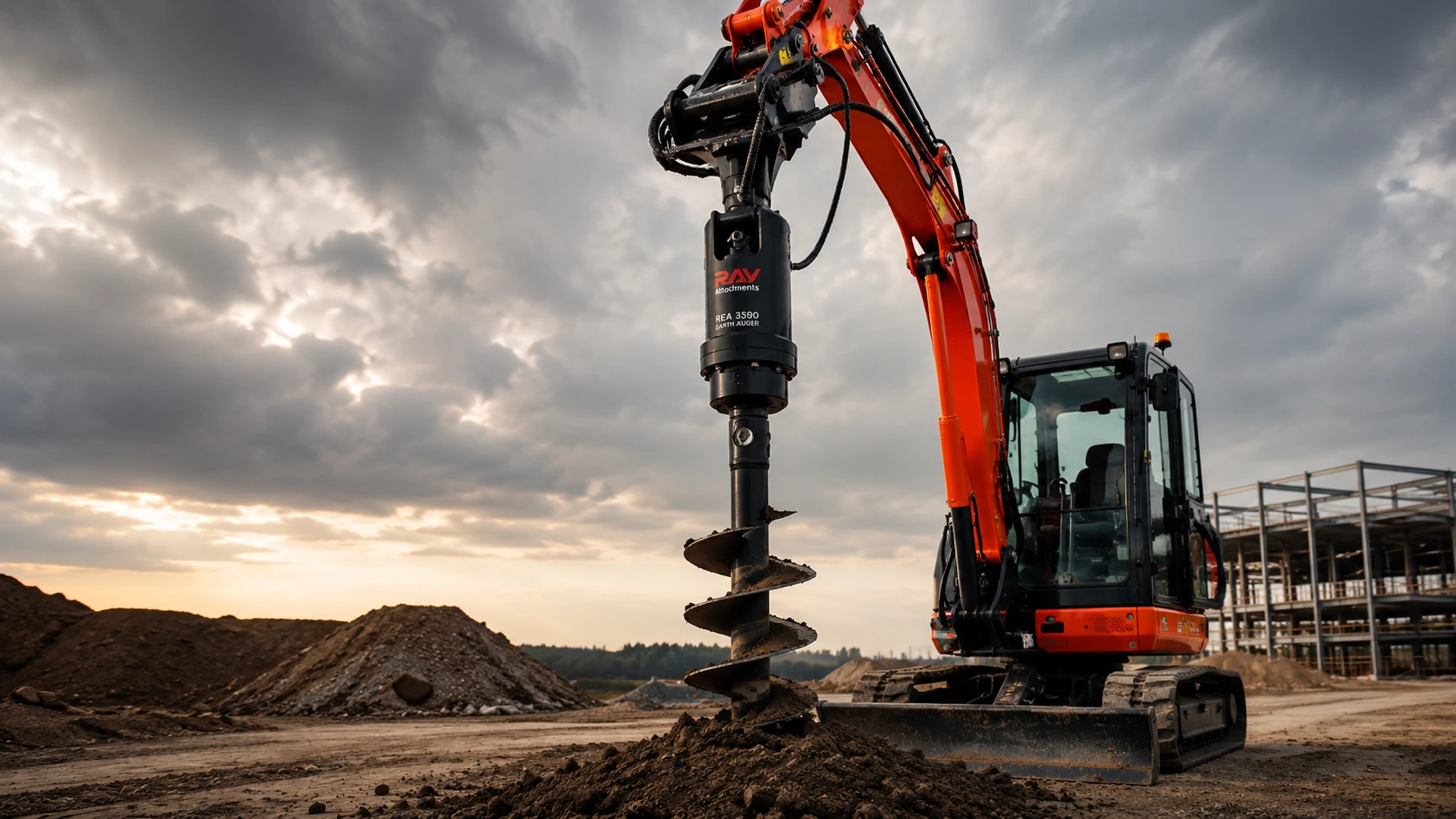
Ground-led engineering review
Foundation & Structural Drilling
Foundation-related enquiries require a disciplined review of ground resistance, hole geometry, carrier stability and the structural path from the machine to the cutting tool.
Engineering priorities
Ground resistance is transferred through the complete attachment system.
The carrier, hitch, drive, output shaft, auger and teeth must be reviewed as one load path. Increasing torque without checking the other elements can move the risk rather than solve it.
01Carrier stabilityWeight, boom posture and hydraulic availability
02Mounting structureCoupler, pins, frame and articulation
03Drive outputTorque range, speed and duty expectation
04Ground toolFlight, pilot, teeth and obstruction response
Ground-risk matrix
Identify the ground uncertainty before selecting the equipment.
This matrix structures the technical discussion. It is not a guarantee of drilling feasibility.
Condition
Selection emphasis
Information required
Escalation point
Uniform soft soil
Diameter, depth and cycle
Basic soil description and hole schedule
Large diameter or long continuous operation
Compacted soil
Torque reserve and suitable teeth
Compaction, moisture and previous site experience
Uncertain layer depth or high wear
Mixed ground
Tooling flexibility and carrier stability
Layer sequence, stones and expected changes
Frequent obstruction or unstable spoil removal
Unknown obstruction
Feasibility and safety review
Survey data, trial information and project constraints
Specialist engineering confirmation
Quotation readiness
A foundation-drilling quotation requires more than carrier weight and hole diameter.
Prepare the information below before requesting a firm configuration.
Bring the ground profile and structural requirement into the product review.
Unknown material should be treated as an engineering variable, not hidden inside a model recommendation.